

Sunscreen is one of those topics where the more you dig in, the more questions you end up with. You started by just wanting to protect your skin, and now you’re deep in a rabbit hole wondering whether your SPF 30 from last summer is still good, whether mineral is better than chemical, and whether you should be spending more on a “professional” formula or just grabbing something off the drugstore shelf.
This is a useful guide to mineral sunscreen, what makes it different, how it compares to chemical options, when it expires, and how to pick the right SPF level for your life.
This is probably the question we hear most often, and it’s a good one. The difference comes down to how each type protects your skin from UV damage.
Chemical sunscreens absorb into your skin and work by converting UV rays into heat, which is then released from the body. Active ingredients like avobenzone, oxybenzone, octinoxate, and homosalate are common in these formulas. They tend to feel lighter and more invisible on the skin – which is why they’ve historically been popular.
Mineral sunscreens (also called physical sunscreens) take a different approach entirely. Instead of absorbing UV rays, they sit on top of the skin and physically deflect UV radiation away. The two active ingredients that do this work are zinc oxide and titanium dioxide – and they’re the only two UV filters that the FDA currently recognizes as Generally Recognized as Safe and Effective (GRASE).
Here’s a quick side-by-side comparison:
Neither type is universally “better” but mineral sunscreen has some real advantages that make it worth understanding, especially if you have sensitive skin or you’re trying to be more mindful about ingredients.
In recent years, there’s been a noticeable shift toward mineral formulas and it’s not just a trend.
A few things are driving it:
Growing concerns about chemical filter safety. FDA-commissioned research published in JAMA found that several chemical UV filters are absorbed into the bloodstream at levels that exceed what the agency considers acceptable without further safety testing. The science is still evolving, but for many people, particularly those who are pregnant, breastfeeding, or applying sunscreen to young children – this has prompted a switch to mineral options.
Reef protection awareness. Hawaii and several other regions have banned certain chemical UV filters due to their documented damage to coral reefs. Mineral sunscreens, particularly those formulated with non-nano zinc oxide, are widely considered the more eco-conscious choice.
Better formulas. Let’s be real: older mineral sunscreens had a reputation problem. The white cast, the thick paste texture, the way they’d roll up under makeup, not exactly a great experience. But formulations have improved dramatically. Today’s best mineral SPF formulas are lightweight, blendable, and wear beautifully.

CeraVe is one of the most recommended drugstore skincare brands out there, and for good reason. Their mineral sunscreen options have made physical SPF accessible and affordable for a lot of people.
CeraVe Hydrating Mineral Sunscreen uses both zinc oxide and titanium dioxide alongside the brand’s signature trio of ceramides (1, 3, and 6-II), plus hyaluronic acid. The result is a sunscreen that not only protects but actively supports the skin’s moisture barrier , a big deal for dry or sensitive skin types.
It’s a solid, dermatologist-recommended option for everyday use, and it’s a great entry point if you’re new to mineral sunscreen. That said, if you’re dealing with specific skin concerns – hyperpigmentation, post-procedure skin, active aging concerns, you may find that a professional-grade formula like Obagi Sun Shield Mineral SPF 50 or SkinCeuticals Physical Fusion UV Defense SPF 50 offers more targeted benefits worth the investment.
The short answer on CeraVe mineral sunscreen? Great for the price. Genuinely good ingredients. A fine daily option , just know there are more advanced formulas available when you’re ready for them.
By law in the US, sunscreen must maintain its labeled SPF for at least three years from the manufacture date. After that point, the active ingredients begin to degrade, which means your SPF 50 bottle might be providing significantly less protection than the label claims. The American Academy of Dermatology recommends discarding any sunscreen that has reached its expiration date or that you’ve had for more than three years.
Beyond expiration, proper storage matters too. Keep your sunscreen in a cool, dry place and avoid leaving it in a hot car or at the beach for hours. Heat and UV exposure can break down both the packaging and the active ingredients faster than you’d expect.
The bottom line: don’t count on last year’s sunscreen. Your skin’s protection is too important, and sunscreen isn’t that expensive to replace.
This is one of those debates where the science is clear but the marketing has made it confusing. Here’s the straightforward version:
That 1% difference sounds almost meaningless, and in a vacuum, it kind of is. But context matters.
The real-world case for SPF 50 comes down to one thing: most people don’t apply enough sunscreen. Studies consistently show that the average person applies only 25–50% of the recommended amount. When you factor in under-application, SPF 50 provides a meaningful buffer that brings your real-world protection closer to what SPF 30 would deliver if applied correctly.
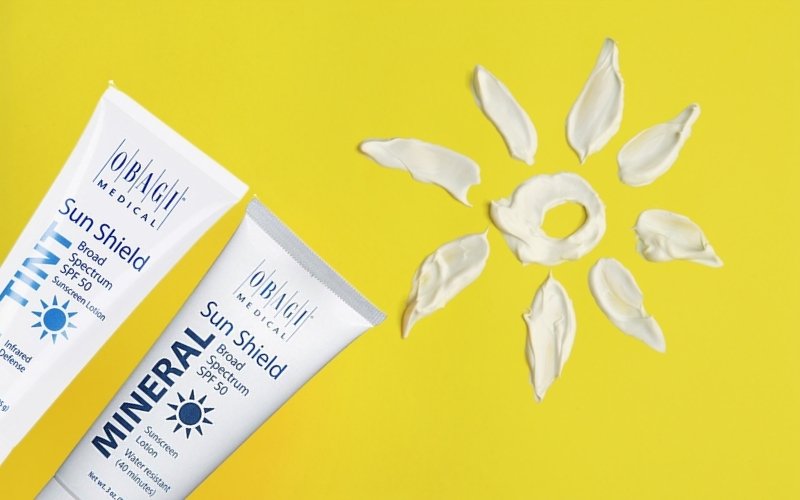
For most of our patients and clients, we recommend leaning toward SPF 50 as a daily standard, not because SPF 30 is bad, but because the small difference in formulation cost is worth the extra protection buffer. Both the Obagi Sun Shield Mineral SPF 50 and the Obagi Sun Shield Tint Cool SPF 50 hit that SPF 50 mark while still wearing comfortably enough for everyday use, which means you’ll actually want to put them on.
Here’s where we get practical. The best mineral sunscreen is the one that fits your skin type, your routine, and your life. A few of our favorites:
The Obagi Sun Shield Mineral SPF 50 is everything you want in an everyday mineral SPF. It’s 100% mineral (zinc oxide only), fragrance-free, lightweight, and blends without leaving a white cast. It layers beautifully under makeup and is gentle enough for even the most reactive skin types. If you want one product that does its job quietly and well every single day – this is it.
The Obagi Sun Shield Tint Cool SPF 50 is the overachiever of the group. Same broad-spectrum mineral protection, but with a cool-toned tint that evens out redness, neutralizes uneven skin tone, and gives you that “you look well-rested” kind of glow. It also provides protection against visible light, which matters if hyperpigmentation or melasma is a concern for you. This one regularly replaces both primer and SPF in morning routines.
If you’ve recently had a laser treatment, chemical peel, or any procedure that leaves skin sensitized, SkinCeuticals Physical Fusion UV Defense SPF 50 is the gold standard. It uses both zinc oxide and titanium dioxide in a fluid, universally flattering tinted formula that works across a wide range of skin tones. The addition of Artemia Salina plankton extract helps boost the skin’s natural UV defense response over time, and antioxidant-rich turmeric extract helps fight free radical damage. It’s genuinely one of the most elegant mineral sunscreen formulas available anywhere.
No matter which formula you choose, the habits around how you use it matter just as much as the product itself:
Mineral sunscreen has quietly become the smarter choice for a lot of people, not because chemical sunscreen is bad, but because mineral formulas have caught up in texture and wearability while offering a cleaner, more immediate, and gentler form of protection.
Whether you’re reaching for a drugstore option like CeraVe to start building the habit, or you’re ready to invest in a professional formula like Obagi or SkinCeuticals for targeted results, the most important thing is simple: just wear it. Every day. Enough of it. And replace it when it expires.